|
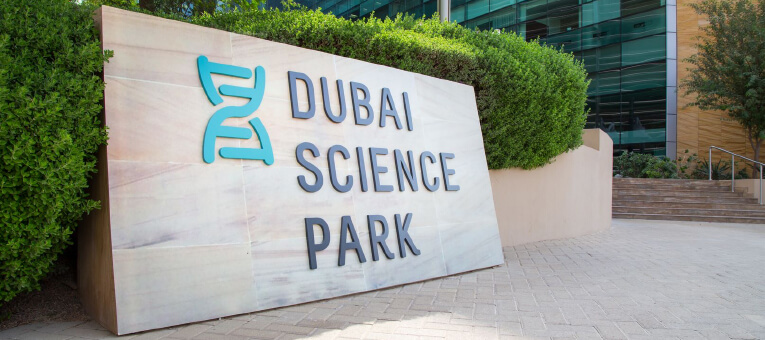
Enpark is located and operates within the jurisdiction of Dubai Technology & Media Free Zone (the “Free Zone”). The Free Zone was established in 2000 by a decree and has a distinct legal status in the UAE.
The Free Zone is regulated by an independent government body, Dubai Technology & Media Free Zone Authority (DTMFZA). DTMFZA develops and implements transparent regulations, in accordance with international standards, which ensure that the companies operating in The Free Zone are able to compete effectively, globally.
The laws and regulations that apply to companies operating in The Free Zone are described clearly in DTMFZAs website
Industry Specific Regulatory Environment
In view of the increasing energy and environment challenges, The UAE governments are committed to continuously improve the regulatory environment and in developing guidelines to promote sustainable development.
Click on the headings for more information.
One strategy for the UAE governments to tackle the rising electricity demand is to privatise the power generation sector. A successful privatisation model has been implemented in Abu Dhabi since 1998. Contracts for Independent Power and Water Producers (IWPPs) are awarded through open and transparent competitive bidding processes. So far, four IWPPs have been introduced in the Abu Dhabi water and electricity sector on a build, own and operate (BOO) basis via joint venture arrangements between Abu Dhabi Water & Electricity Authority (ADWEA) and various other international companies. For more details of this model, please visit ADWEA website.
In Dubai, the Dubai Water and Electricity Authority (DEWA) is the regulator as well as the operator of water and electricity production. However, in early 2011, the Government of Dubai announced plans to privatise certain aspects of its water and electricity production. According to its plan, DEWA is going to award the contract for the emirate's first IWPP in 2011. Further, the Dubai government also announced that it would soon issue two decrees ending the government’s monopoly on power and water supply and allow private companies into the industry.
In March 2011, Abu Dhabi was the first Emirate to introduce a waste tariffin the UAE. According to this new regulation, all government, semi-government and private sectors will need to pay a tariff, for a list of 4,500 waste-generating activities. The waste tariff ranges from a minimum annual fee of Dh225 per tonne to a maximum of Dh50,000 per tonne. This new regulation is believed to significantly increase recycling activities in the UAE.
Dubai has also started to regulate waste management and is gradually shifting to better sustainable practices in managing waste effectively. From February 1st 2011, special permits will be required to transport and dispose of different types of waste. The system will also help obtain comprehensive statistics relating to waste generation in Dubai, which will assist the government in developing more sustainable waste management practices. For more details related to UAE recycling laws and regulations, please refer here.
In Nov 2010, Dubai government approved the much-anticipated Green Building Code, which will be rolled out in phases. The new regulations aim to implement green building designs for buildings by using energy-efficient construction materials and methods to reduce consumption of power and water supply.
In Abu Dhabi, a new mandatory green building code was introduced in Aug 2010. By September 2011, all new buildings must meet sustainability and urban design requirements in order to receive approval for construction. Developed by the Urban Planning Council (UPC), the Estidama Pearl Rating System mandates that all buildings achieve at least a one-pearl rating.
At the federal level, the UAE government plans to introduce a green building code from 2011. The federal green building code is expected to regulate green building codes developed by individual emirates.
Moreover, the UAE government continues to focus on improving its legislative regime to increase competitiveness in this area. An array of UAE lawsare in their final drafts, which according to HE Sultan Bin Saeed Al Mansouri, the UAE Minister of Economy, the improved legislation will further address concerns regarding commercial regulations and arbitration and will at the same time aid in promoting efficiency, transparency, and investor confidence in the business sector.
|